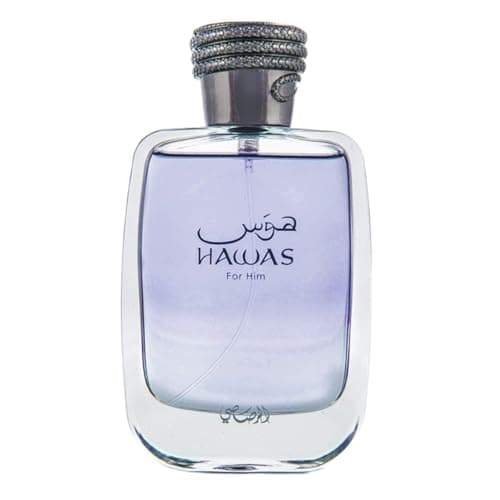
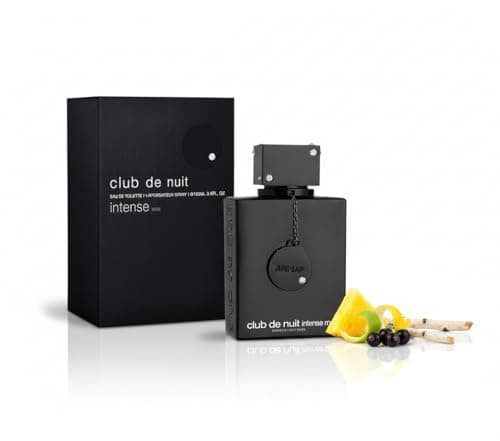
The two budget kings
If you have spent five minutes in a fragrance forum, you have seen these two names: Armaf Club de Nuit Intense Man and Rasasi Hawas For Him. They are the poster children for the Middle Eastern budget-fragrance boom — cheap bottles that punch far above their price and made "you do not need to spend a lot to smell expensive" a mainstream idea. But they are not interchangeable.
Club de Nuit Intense is a smoky pineapple clone of a famous luxury scent; Hawas is a fresh, fruity, all-day crowd-pleaser that stands on its own. One chases a legend; the other just tries to be great value. That difference in intent is exactly what should decide which one lands on your shelf.
How they smell, side by side
Armaf Club de Nuit Intense Manis the single most talked-about "smells like Creed Aventus" bottle, and it earns the reputation on the opening: smoky pineapple and birch that a lot of people genuinely cannot tell from the original in the first hour. It drifts sweeter and rougher in the dry-down than the scent it echoes, but as a fruity-smoky statement it is loud, confident and instantly impressive. It is fundamentally a cold-weather, look-at-me fragrance.
Rasasi Hawas For Himis a different animal — a fresh, fruity, slightly sweet aquatic that reads clean and versatile rather than smoky and bold. It is the "freshie with power" the budget world is always chasing: an inoffensive, easy-to-wear profile that most cheap fresh scents fail to make last. Where Club de Nuit turns heads, Hawas keeps you smelling good all day without announcing anything.
So the smell choice is straightforward: Club de Nuit if you want a bold, smoky-fruity showpiece, Hawas if you want a clean, fresh daily. They share only a price bracket and a reputation for over-delivering — not a scent profile.
Performance and versatility
Both are famous for performance, which is the whole reason they built their reputations. Club de Nuit Intense is a beast — owner consensus of eight-plus hours with room-filling projection, genuinely strong by any standard, budget or not. Hawas is nearly as impressive in a quieter way: rare all-day longevity for a fresh scent, with moderate, well-behaved projection. Neither will leave you re-applying, which is exactly what separates them from most cheap fragrances.
Versatility is where Hawas pulls ahead. Its fresh, easy profile works across seasons and settings — office, daytime, warm weather — where Club de Nuit's smoky loudness is really a fall-and-winter, going-out proposition that overwhelms a hot day or a small room. Club de Nuit gives you more drama; Hawas gives you more days you can actually wear it.
The dupe-economics angle
These two are the clearest case study in why the budget-Arabian category exploded. Club de Nuit Intense is a clone — it openly chases a specific luxury scent and delivers most of its opening for a small fraction of the money, which is the entire clone value proposition. The trade-offs are the ones every clone carries: a less refined dry-down and some batch-to-batch variation, so two bottles can smell subtly different.
Hawas is the other model — not a copy of anything in particular, just a well-built house scent priced low because the brand skips the designer marketing machine. Both prove the same point: a lot of what you pay for in mainstream fragrance is the name on the bottle, not the juice inside it. To understand which corners get cut to hit these prices, the clone houses guide breaks down the quality tiers, and the best cologne dupes list maps the wider field.
The verdict
Buy Club de Nuit Intense Man if you want the Aventus-style experience — smoky pineapple, big projection, real presence — for a fraction of luxury money, mostly for cold weather and nights out. Buy Hawas if you want a versatile, fresh, all-day scent that quietly over-delivers and goes with everything. Many people who love this category simply own both, because together they cover bold and easy for less than the price of one designer bottle. Both anchor our Arabian fragrances guide; full detail is in the Club de Nuit review and the Hawas review.