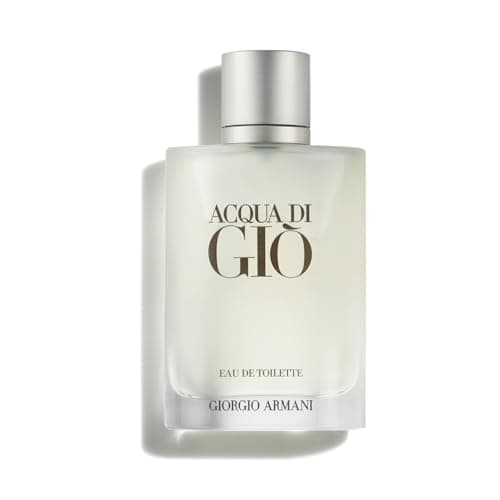
If one bottle can be blamed for the tidal wave of blue, watery men's fragrances that followed it, this is the one. Giorgio Armani's Acqua di Gio arrived in 1996 and more or less invented the modern marine aquatic as a mass-market idea. Thirty years on it is still a best-seller, still a summer staple, and still, in its original form, lighter on performance than newcomers expect. All of that is worth understanding before you buy.
The scent that started a genre
Acqua di Gio, composed by Alberto Morillas, took the then-novel "aquatic" accord, a synthetic that conjures sea air and wet stone, and built a whole fragrance around the idea of Mediterranean water and sunshine. The name nods to the water and to Giorgio himself. It was so successful that a large share of the fresh fragrances of the following two decades are, in some sense, its descendants. Wearing the original today is a little like hearing the song everyone later sampled.
The note pyramid
The top notes open bright and citrusy: lime, lemon, bergamot and neroli, with a jolt of marine freshness. The heart notes bring in rosemary, a salty sea accord, jasmine and a soft peach, keeping it airy rather than sweet. The base notes, the heavier elements that linger, are white musk, cedar, patchouli and a light amber. Put together it reads as salty citrus over clean skin: crisp, watery and transparent rather than rich. Base notes, for the record, are the molecules that emerge last and hold longest.
Built for heat
This is a summer fragrance in its bones. In high heat, when heavier scents turn syrupy and suffocating, Acqua di Gio stays clean, cool and easy, which is exactly why it became the default warm-weather pick for a generation. It is effortlessly office-safe, works from a beach to a dinner, and is close to impossible for anyone to actively dislike.
The performance catch, and the flankers
Here is the honest part. The original Eau de Toilette is light. Longevity, how long it lasts on your skin, and sillage, the trail it leaves behind you, are both modest; it can fade to a skin-scent within a few hours and often wants a top-up across a long day. That is partly the nature of airy aquatics and partly just this formula. Armani has since released stronger flankers, notably the darker, smoky Profumo and the more recent Parfum, that keep the marine idea but hit harder and last longer. If the EDT's lightness is the only thing holding you back, those exist for a reason.
The ubiquity question
Like the other genre-definers, Acqua di Gio is everywhere, and has been for decades. That means it is a safe, familiar, universally readable choice, and also that it says very little that is specific about the wearer. Whether that reads as a feature or a flaw depends entirely on what you want a fragrance to do for you. If a familiar, effortless fresh is the goal, this is one of the best in the whole fresh family.
Who should skip this
Skip the EDT if you need all-day power from a single application, if you want something distinctive rather than familiar, or if aquatic freshness simply bores you; some noses find the whole genre a bit anonymous. If you love the profile but want more staying power, look to the Parfum flanker rather than writing the scent off. And if what you actually want is warmth rather than marine freshness, the Armani Code vs Acqua di Gio comparison weighs this against the house's warm evening pillar. For summer, worn for what it is, the original remains a genuine classic.
The choice with Acqua di Gio is less about whether to buy it and more about which strength matches how you plan to wear it.
The original EDT for hot-weather versatility
The Eau de Toilette is the classic: bright, salty, transparent and effortless in heat. Buy it if you want the definitive summer aquatic for daytime, the office and casual wear, and if you do not mind topping up over a long day. It is the version most people mean when they say "Acqua di Gio," and it is the one linked here.
Step up to the Parfum or Profumo for performance
If the EDT's light footprint frustrates you, the higher-concentration flankers keep the marine character but project harder and last longer, and the Profumo in particular adds a darker, smoky-incense twist that carries into cooler weather. They are the answer to "I love it but it disappears," not a different fragrance so much as the same idea with the volume turned up.
Either way, apply to skin rather than clothing and consider a second spritz at midday in summer; airy aquatics reward a light, frequent hand over one heavy dose.