The shared name is the problem
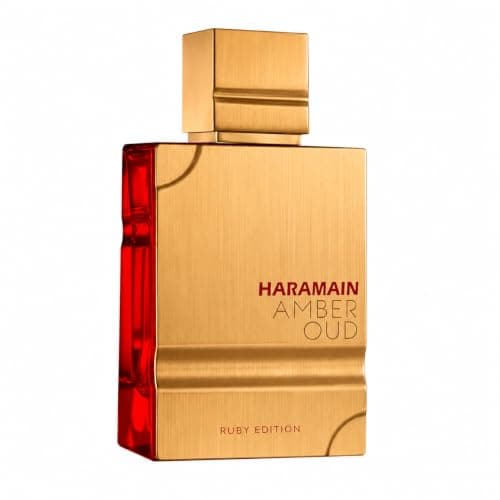
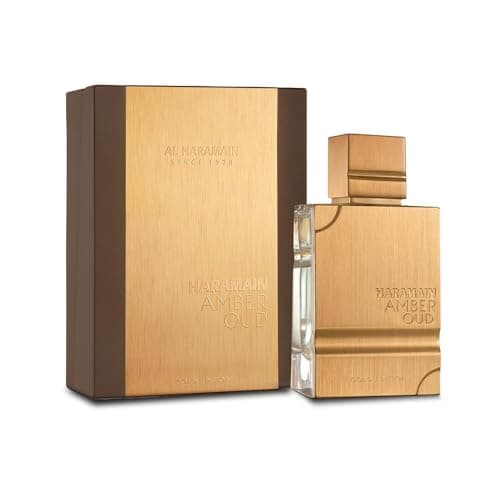
These two bottles sit next to each other on the same shelf, wear the same "Amber Oud" family name from the same Middle Eastern house, and cost within a few dollars of one another. Most people reasonably assume they are variations on a theme — that Ruby is Gold with the dial turned somewhere, the way Sauvage and Sauvage Elixir relate to each other. They are not. Read the published note pyramids side by side and they barely overlap.
Amber Oud Gold Edition (launched 2018) is a fruity-sweet amber: bergamot and green notes over melon, pineapple, sweet notes and amber, landing on vanilla, musk and woods. Amber Oud Ruby Edition (launched 2022) is a saffron-and-almond amber: bitter almond and saffron over Egyptian jasmine and cedar, landing on ambergris, woody notes and musk. Tropical fruit and vanilla in one; saffron, almond and jasmine in the other. They are chasing two different famous niche fragrances, and the only things they genuinely share are the house, the price bracket, the amber-adjacent warmth and the strong performance the brand is known for.
So the useful question is not "which is better." It is "which of two unrelated scents do you actually want," and the shared name gives you almost no help answering it. That is what this page is for.
How they smell, side by side
Gold Edition is the sweet, juicy, glowing one. The published pyramid opens bright and green with bergamot before the fruit arrives — melon and pineapple over a sweet amber heart — and it settles into a plush vanilla-musk-woods base. In wear it reads as a syrupy, radiant, fruity amber rather than anything dark or resinous, and that immediate likeability is exactly why it became a gateway bottle for so many people. Our Amber Oud Gold review covers the full arc, including where the sweetness tips over.
Ruby Editionis the warmer, more grown-up, more "expensive-smelling" one. Bitter almond and saffron up top give it a spiced, faintly marzipan-like lift; jasmine and cedar hold the middle; ambergris, woods and musk carry the long, warm dry-down. This is the one people cross-shop against Maison Francis Kurkdjian's Baccarat Rouge 540, and the saffron-jasmine-amberwood structure is genuinely why. The Amber Oud Ruby review goes into how close it gets and where it gives itself away.
| | Gold Edition (2018) | Ruby Edition (2022) |
|---|
| Published top notes | Bergamot, green notes | Bitter almond, saffron |
| Published heart | Melon, pineapple, sweet notes, amber | Egyptian jasmine, cedar |
| Published base | Vanilla, musk, woody notes | Ambergris, woody notes, musk |
| Overall character | Sweet, fruity, syrupy, radiant | Warm, spiced-almond, resinous-amber |
| What it chases | The fruity niche-amber style | The Baccarat Rouge 540 accord |
| Reads as | Younger, friendlier, more obvious | Older, dressier, more polished |
| Performance | Excellent by owner consensus | Strong by owner consensus |
| Price bracket | Effectively identical — both sit in the budget Arabian tier; check the live prices on the cards above |
One thing worth saying plainly about both: neither smells much like oud. The word is doing marketing work in the line name rather than describing a dominant note. If you came looking for the dark, smoky, faintly medicinal thing real oud does, neither of these is it — our oud and amber ranking separates the genuinely oud-forward bottles from the ambers wearing the name.
Which one, for whom
Choose Goldif you like sweet fragrances without apology, if you are new to this and want the bottle that most reliably produces the "wait, what are you wearing" reaction, or if you are buying a gift for someone whose taste you do not know well. Its fruity sweetness is the more immediately impressive of the two and the easier one to like on first spray. It also skews a little younger and a little louder, which is a feature at a party and a liability at a dinner table.
Choose Ruby if you specifically want the saffron-amber BR540 territory, if you would rather smell polished than sweet, or if you already own something fruity and want your second bottle to do a different job. It is the more versatile of the two in adult company and the one that holds up better in a room full of people who might notice a scent. Its trade-off is a short rough patch: the opening can read sharp or slightly medicinal for the first ten to fifteen minutes before the warm amber lands.
If you are choosing your first Arabian bottle full stop and neither description grabs you more than the other, our Arabian fragrance ranking puts both in the context of the wider category — including several bottles from Lattafa and Rasasi that may suit you better than either.
The honest cons, on both sides
Gold's knocks: it is sweet, and past two sprays that sweetness turns syrupy and reads synthetic. It divides opinion on refinement — plenty of experienced noses find it cloying and one-note next to what they are used to — and it is firmly a cool-weather scent that gets heavy in heat. It is also common now, which matters if smelling distinctive is part of what you want.
Ruby's knocks: that sharp opening is real and frequently reported, so expect to wait it out. Batch variation is a genuine issue with this tier of house — bottles can wear noticeably stronger or sweeter than one another — and if you own the fragrance it echoes, you will clock the difference immediately. Like Gold, it is a cold-weather, evening-leaning scent rather than an all-rounder.
Neither of those lists is a reason not to buy. They are the reasons these bottles cost what they cost, and at this price the trade is a good one. What we will not tell you is that either is indistinguishable from a fragrance costing ten times as much, because neither is.
Season, occasion and how they wear
Both are cold-weather scents, so this is not a versatility contest between a summer bottle and a winter one — it is a question of which cold-weather role you are filling. Gold is the casual one: nights out, cold afternoons, anywhere a loud sweet scent is welcome. It is also the more forgiving of the two if you are still learning how much to apply, because its failure mode is being too much rather than being wrong.
Ruby is the one you reach for when there is a dress code. The saffron-amber warmth reads as considered rather than fun, which suits dinners, dates and evening events better than Gold's pineapple sweetness does. It is not an office scent — neither of these is, and our work-safe ranking exists precisely because scents like these are the wrong tool for a shared room — but it is the closer of the two to something you could wear somewhere serious.
Application matters more with both than with a typical designer bottle. These are strong, sweet, long-lasting fragrances by owner consensus, and one or two sprays genuinely is the dose. The single most common complaint about either is over-application, which is a user error the price encourages — cheap bottles invite generous spraying, and these two punish it. If you want the mechanics, our spray-count guide covers how this scales with concentration.
The verdict
For most buyers, Ruby is the better bottle and Gold is the better first bottle — and those are not the same recommendation. Ruby is more interesting, more grown-up, wears better in company and occupies the more desirable niche territory. Gold is more immediately lovable, harder to dislike on a first sniff and a more reliable crowd-pleaser, which is exactly what you want from a gateway purchase or a gift.
If you own neither and you are buying one: pick by the note lists above, not by the shared name. Sweet-fruit person, buy Gold. Warm-spiced-amber person, buy Ruby. If you own Gold and are wondering whether Ruby is redundant, it is not — they are different enough that owning both is entirely reasonable, which is not something we would say about most same-line flankers. And if what you actually want is the BR540 accord specifically, Ruby is only one of several credible options; our Baccarat Rouge 540 dupesroundup ranks the whole field, including Orientica Amber Rouge and Maison Alhambra Barakkat Rouge 540, so you can see where Ruby's cheapness does and does not cost you something. And if the bottle you are actually weighing against Ruby is the older Amber Oud Rouge — the leaner, more literal one — that pairing has its own comparison.
Our scores on both come from compiled research — published note pyramids and concentration data, aggregated owner and community reports on longevity and projection, and our own impressions where genuine. They are judgments, not lab measurements, and our methodology page spells out exactly what that means.
Which should you buy?
Buy Gold if you want sweet, fruity and instantly likeable
It is the friendlier scent and the safer gift. Melon, pineapple and vanilla over a glowing amber is an easy thing to love, performance is excellent for the money, and it is the bottle that has convinced more beginners that cheap can smell expensive than almost any other. Accept that it is sweet, keep it to a spray or two, and save it for cool weather.
Buy Ruby if you want the saffron-amber, BR540-adjacent lane
Bitter almond and saffron into jasmine, cedar and ambergris is the more sophisticated composition and the one that reads as expensive rather than as sweet. Budget ten to fifteen minutes for the opening to settle before you judge it, and expect some bottle-to-bottle variation.
Buy both, if the budget allows — genuinely
This is not upselling. Because the two share so little beyond a name, owning both gives you two distinct cold-weather options rather than a duplicate, and at this tier that costs less than a single designer bottle. If you are building a first collection deliberately, our collection-building guide covers how to avoid buying the same scent twice under different labels — a much more common mistake than this one.
Before you buy either, know the house
Al Haramain is a long-established Middle Eastern house, not a fly-by-night clone brand, but it does sit in a category where quality control is looser than a French maison and where counterfeits exist. Buy from a seller you trust, and if you are unsure what you received, our guide to spotting fake cologne covers the checks. Our clone houses explained guide covers who these brands actually are.