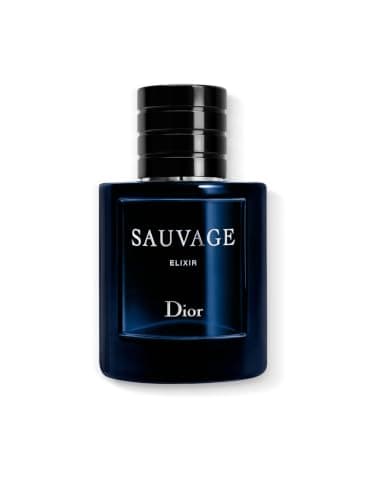
If the standard Dior Sauvage is the scent you smell on every third man in a coffee line, the Elixir is the bottle that man reaches for when the temperature drops and being noticed is the entire point. It shares a name and a clear family resemblance with the world's best-selling men's fragrance, but make no mistake — this is a different animal, not simply a stronger version of the same thing. It is denser, spicier, darker and far more expensive per milliliter, and it is engineered for a narrow but genuinely rewarding set of occasions rather than for everyday duty.
A concentrated reinterpretation, not a louder EDT
Sauvage Elixir sits at parfum strength, the richest tier above the original eau de toilette and the eau de parfum. Concentration simply means how much fragrance oil is in the mix; it drives intensity and how long a scent lasts, not its quality. The important thing to understand is that the Elixir is not the EDT with the dial turned up. Under perfumer François Demachy, Dior rebuilt the composition around a wall of spice and a grapefruit-forward opening, so the Sauvage DNA is still recognizable underneath while the character is markedly different: heavier, more nocturnal, and considerably more polarizing than the crowd-pleasing original ever was.
The note pyramid
A fragrance is usually described as a pyramid that unfolds over time. The top notes are the opening few minutes: a bright, slightly bitter grapefruit lit up by a rush of cinnamon, nutmeg and cardamom that lands like a handful of the spice cabinet. The heart notes carry the next stretch: a big, aromatic lavender threaded with licorice, which is the single most divisive facet of the whole scent. The base notes are the heavy molecules that linger for the rest of the wear: a dry amberwood, a little patchouli and the resinous woods that give the Elixir its density. If you only remember one thing, remember that spice-and-licorice-lavender core, because it is what separates the Elixir from every other Sauvage and what people either adore or cannot abide.
The spice wall, and the licorice question
Where the EDT reads as clean, peppery and breezy, the Elixir reads as thick and spicy from the first spray. That aromatic-lavender-and-licorice accord is the make-or-break moment. To a lot of wearers it smells rich, adult and expensive — a proper cold-weather statement. To others the licorice tips into something medicinal or cough-drop-like that they never fully warm to. There is no neutral reaction here, which is exactly why sampling matters more with this bottle than with the safe, agreeable EDT. You are buying character, and character divides a room.
How it performs
Three words worth defining. Longevity is how long you can still smell it on your own skin. Sillage, from the French for a boat's wake, is the scent trail you leave behind as you move. Projection is the size of the scent bubble around you while you stand still. On all three, owner consensus is emphatic: the Elixir is a beast. Community reports routinely describe it clinging to skin and clothing well into the next day and throwing a large, room-aware cloud for hours after application. We do not publish exact hour counts, because skin chemistry, dosage and weather move the number too much to state one honestly, but by owner consensus this is roughly an all-day-and-then-some performer — one of the strongest designer releases you can buy.
The honest part
Three fair criticisms. First, the price: this is a premium parfum sold in a small bottle, so the cost per milliliter is steep even by designer standards, and a single generous spray can feel like spending real money. Second, it is emphatically not versatile — the density that makes it wonderful on a freezing night makes it suffocating in a warm meeting room or on a summer afternoon. Third, the licorice-lavender accord is polarizing, so a bottle you love may be a bottle a colleague quietly cannot stand. None of that is a knock on the quality of the blend; it is a description of a specialist tool being exactly what it is.
Where it fits — seasons and occasions
Think of the Elixir as a cold-weather, after-dark bottle first and everything else a distant second. It comes alive in autumn and winter, on dates, at dinners and on nights out where a big, spicy trail is a feature rather than a nuisance. In a small fragrance wardrobe it is the statement piece you reach for when you want to be remembered, not the workhorse you wear to the office five days a week. If you already own the EDT for everyday duty, the Elixir is the natural upgrade for the handful of occasions that call for something heavier and more deliberate.
How to wear it
A scent this concentrated punishes a heavy hand harder than almost anything else on a designer shelf. One spray, occasionally two, applied to the chest or the sides of the neck is genuinely enough for a whole evening, and skin holds the spicy base better than clothing. Resist the urge to top up: because it projects so hard for so long, a second dose usually just tips a striking scent into an overwhelming one. If you are new to it, start with a single spray and learn how far it travels before you commit to more — you can always add, but you cannot pull a spice cloud back out of the air.
Elixir, EDT and EDP
It is worth being clear about how the three main concentrations relate, because the names invite confusion. The EDT is the bright, peppery, endlessly versatile original — the one most people should own first. The EDP is warmer and sweeter with a vanilla lean and more staying power. The Elixir is the outlier: the spiciest, densest and most distinctive of the three, and the least interchangeable with the others. If you want the full breakdown, our Sauvage-versus-Elixir comparison lays the concentrations side by side; the short version is that the Elixir is a specialist, not an upgrade path.
Who should skip this
Skip the Elixir if you want the breezy, do-anything everyday Sauvage — the EDT is the better, cheaper answer. Skip it if you mostly need a warm-weather or office scent, because its density is built for cold air and after-dark occasions. And skip it if the licorice-lavender accord does not agree with your nose, which is the one facet that genuinely divides opinion. For a cold-weather beast that turns heads and lasts, though, there are few designer bottles that do the job as convincingly.
Buying the Elixir well is mostly about being honest with yourself about when you will actually wear it. Here is how to think it through.
Buy it as a specialist, not a first Sauvage
If this is your first bottle in the line, buy the EDT instead — it is more versatile, cheaper and easier to love. The Elixir earns its place as a second or third bottle, the statement piece you add once you already have an everyday scent sorted. Treat it as a tool for specific occasions and it delivers; treat it as a daily driver and its density will wear you out within a week.
Reserve it for cold weather and after dark
This is a fall-and-winter, evening fragrance, full stop. The spicy amber base blooms in cold air and turns heavy and cloying in the heat, so it is a poor summer or office choice. On a cold night out, on a date, or at a winter dinner, it is exactly the right amount of too much.
Go easy on the trigger, and sample first if you can
Because it is so concentrated and so polarizing, the smart move is to try it on skin before committing, and to under-apply once you own it. One spray goes a very long way. If you love big spice and do not mind announcing yourself, it is a joy; if you prefer subtlety or you are unsure about licorice, sample before you spend.