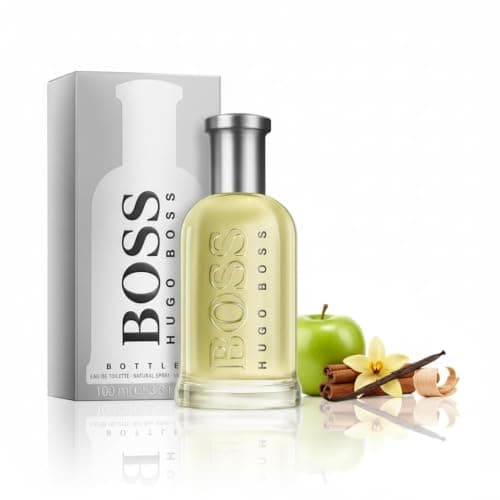
The house that sold a generation its first grown-up bottle
There is a decent chance your first real cologne was a Hugo Boss. For most of thirty years, Boss Bottled has been the bottle a father buys a son, a partner buys for a birthday, and a man buys himself the week he starts a job that requires a collar. That history has earned the house a reputation as the safe, faintly boring option, and the reputation is about half right. Boss genuinely does specialize in fragrances that make you smell employed. It also makes two of the more distinctive scents on any department-store counter, and then sells them next to half a dozen bottles that are all variations on the same apple and cinnamon.
That crowding is the real problem with shopping this house, and it is not the problem the internet complains about. The issue is not that Boss is dull. The issue is that the shelf now holds Bottled, Bottled Night, Bottled Absolute, Bottled Infinite, Bottled Eau de Parfum, Bottled Parfum, Bottled Absolu and Bottled Beyond, and the names have stopped telling you which is which. Two of them are worth owning on their own terms, a couple more are the same idea at a different strength, and the rest exist because the line sells, not because anyone needed them.
The five picks below are the ones we would spend our own money on, ordered for a buyer rather than a collector. If you already own the original and only want to know whether the upgrades are real, skip to the Bottled mazesection — that is the part of this page that saves money. And if you only want the deep read on the house's one icon, our full Boss Bottled review covers it bottle by bottle.
What we judged these on
Because so much of this catalog is one accord at different volumes, ranking on "which smells best" would tell you almost nothing. We ordered these by the things that actually differ, in this priority:
- Who should buy first. Rank one is the bottle that answers the most common reason people shop this house — a professional, inoffensive, year-round scent — with the least risk, not the bottle an enthusiast would pick.
- Whether it adds anything. A flanker that smells like the original with the dial turned up has to earn its slot on performance alone. One that brings a genuinely different accord gets credit for it.
- Performance for the money. Boss is a mid-price designer house that discounts hard, so we weighed reported longevity and projection against what the bottle actually costs rather than against its list price.
- Honest availability. Only fragrances Hugo Boss currently sells, with a stable mainstream listing, get a ranked slot and a buy link. Limited editions and the bottles the house has moved on from are discussed below without one.
What Boss does well — and where it slips
What the house is unusually good at is the quiet end of fragrance. Boss Bottled, composed by Annick Menardo and Christian Dussoulier and launched in 1998, pairs apple and plum with cinnamon, mahogany and a vanilla-woody base; the house has long pitched it as an early men's gourmand, and what that means in practice is a warm, legible, completely unprovocative scent that works in a meeting room at any time of year. Nothing about it is exciting. That is the design, and it is the reason it still sells.
Where the house slips is performance and discipline. The original EDT is the weakest performer of the core bottles by owner consensus, which is exactly why the stronger concentrations exist. And rather than replace it, Boss has kept re-releasing it — a new concentration or a new adjective every year or two, often with a note list close enough to the last one that only a side-by-side spray tells them apart. The result is a line that punishes casual shoppers and rewards anyone willing to read labels for ten minutes. This page is those ten minutes.
The Bottled maze: one idea, eight bottles
Here is the family laid out by launch year, with the accord each one actually publishes, so you can see how much of it is repetition:
- Boss Bottled (1998, EDT) — apple, plum and bergamot over cinnamon and mahogany, into vanilla, sandalwood and cedar. The original, and the one every retailer stocks. Our rank one.
- Bottled Night (2010, EDT) — lavender and birch over violet, jasmine and cardamom, into woods and musk. The cool, sharp, slightly synthetic night-out take. Not the apple accord at all.
- Bottled Absolute (2019, EDP) — Menardo again: apple, plum and bergamot over cinnamon and cashmere wood, into sandalwood, musk and dry woods. The original, drier and woodier.
- Bottled Infinite (2019, EDP) — apple, cinnamon, sage and mandarin over lavender, rosemary and patchouli, into sandalwood. The original plus a herbal lift, with EDP weight. Our rank three.
- Bottled Eau de Parfum (2020) — Honorine Blanc: apple, black pepper and bergamot over cinnamon, cardamom and chestnut, into musk and vetiver. The spiciest reading of the same shape.
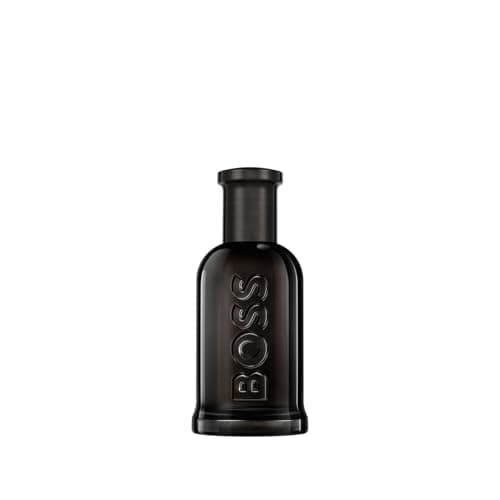
- Bottled Parfum (2022) — olibanum and mandarin over fig and orris, into cedar and leather. The one real departure. Our rank two.
- Bottled Absolu (2024) and Bottled Beyond (2025, EDP) — the most recent additions; Beyond is built on ginger and leather by Daphné Bugey, Frank Voelkl and Bruno Jovanovic, which puts it closer to The Scent than to Bottled.
Read that list and the shape of the decision appears. There are three distinct ideas in eight bottles: the apple-cinnamon original (and its stronger re-recordings), the cool violet-and-birch Night, and the leather-and-incense Parfum. Pick the idea first and the concentration second, and the maze stops mattering. If the concentration part is the bit you are unsure about, our EDT vs EDP guide explains what the labels actually change.
How the five picks differ
Boss Bottled is the default: warm, fruity-spicy, office-proof, and the one to own if you are only ever going to own one. Bottled Parfumis the grown-up outlier — incense, mandarin, fig, orris, cedar and leather — and the only bottle here that will not be recognized as "that Boss smell." Bottled Infinite is the practical upgrade: the familiar accord with sage and lavender through it and the performance the original lacks. The Scent is the most interesting thing the house makes and the most frustrating to wear. And Hugo Man is the green 1995 oddity that has outlived every trend since.
Two of those are seasonal rather than year-round. The Parfum leans cold weather and evenings; Hugo Man is a spring-and-summer scent and reads odd in December. The other three genuinely do work all year, which is the most Boss thing about them.
A closer look at the five
Boss Bottled earns rank one on job-fit, not on excitement. It is the most widely stocked bottle in the line and the safest thing you can wear to an interview or a shared office — which is why it also turns up on our best office cologne ranking. The honest knock is performance: of the three apple-cinnamon bottles it is the one owners most often describe as gone by mid-afternoon. Buy it knowing a re-spray is part of the deal.
Bottled Parfumis the bottle we would buy for ourselves. Olibanum — frankincense — and mandarin open it, fig and orris sit in the middle, and cedar and leather carry the rest, which adds up to something closer to a quiet niche woody than to a mall designer. It is dark without being heavy and formal without being stuffy. The catch is reach: owner reports on wear time scatter from five hours to eleven, and almost everyone agrees it stays within an arm's length. For a parfum concentration that is modest, and it is the main reason this sits at rank two rather than rank one.
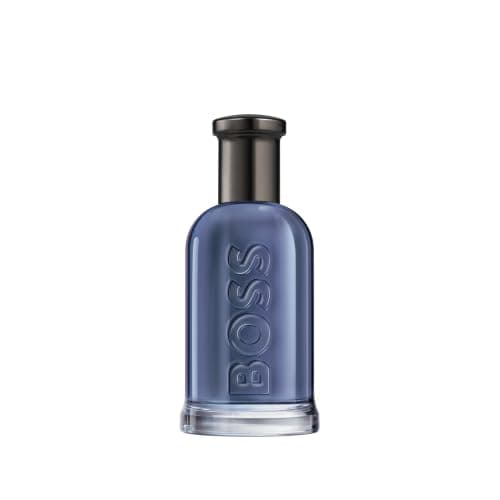
Bottled Infiniteis the unglamorous right answer for a lot of people. It is the original accord with sage, lavender and rosemary stirred in, and owner reports commonly put it at six to eight hours with real projection for the first few — a clear step up on the EDT. Where it lands on price depends entirely on the seller, so compare its live card against the original's before deciding the upgrade costs more; on this house it often does not. It is not a new scent, and some noses find the herbal twist faintly like a grooming product, but as a Boss Bottled that survives a workday it does the job.
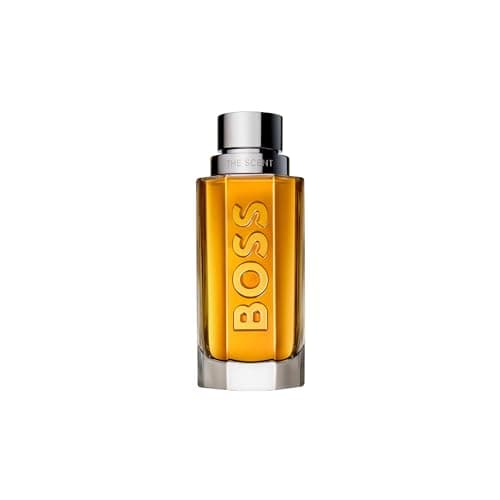
The Scentis the house's one piece of genuine perfumery adventure. Bruno Jovanovic and Pascal Gaurin built it on maninka, a South African fruit material introduced to perfumery with this launch, whose flavor is often described as close to passion fruit and rum; ginger and mandarin open, leather and woods close. It smells adult, warm and quietly seductive, with no obvious designer twin. And then it fades. The EDT runs four to six hours by owner consensus and goes skin-close well before that, with many owners reporting they need four or five sprays to get it to register. We rank it fourth for that reason alone — if the performance held up it would be second. The house sells stronger versions, which we cover below.
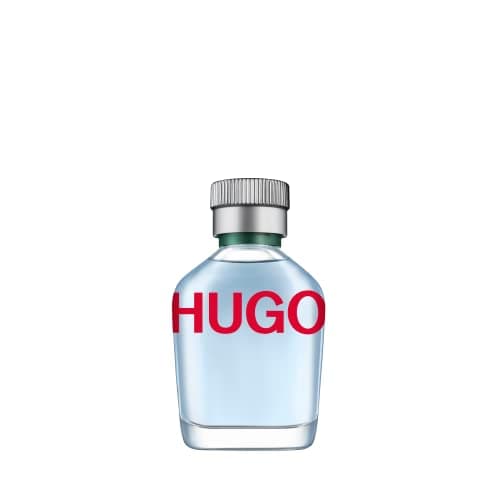
Hugo Manis the budget pick and the only one here that predates the Bottled empire. Bob Aliano's 1995 composition puts green apple, mint, basil and grapefruit over sage and geranium, and lands on fir, cedar and patchouli — cold air and cut stems rather than warm fruit. It is still in production, it is far and away the cheapest legitimate way into the house, and nothing else on the counter smells much like it now. Two honest caveats: modern batches are widely reported to wear lighter than 1990s bottles, and it is unmistakably a 1990s green aromatic, which is either exactly what you want or not for you at all.
What we did not rank, and why
Bottled Night (2010) is the near-miss. It is a real departure — lavender, birch and violet rather than apple and cinnamon — which makes it a sensible second bottle for someone who already owns the original and wants something cooler after dark. It misses a slot because its sharp, synthetic-leaning woody character divides people more than anything else here, and because Bottled Parfum does the dark-evening job with better materials.
Bottled Absolute (2019), Bottled Eau de Parfum (2020), Bottled Absolu (2024) and Bottled Beyond (2025) are all currently sold, and we are not going to pretend each one needs a ranked slot. Absolute and the Eau de Parfum are the original re-recorded drier and spicier respectively; if you like the accord and want more of it, Infinite is the better-documented performer of the three. Beyond is built on ginger and leather, which makes it a The Scent relative wearing a Bottled label — a confusing piece of naming that is exactly the problem with this shelf.
The Scent Le Parfum (2022) and The Scent Eau de Parfum Intense (2026) are the answer to the performance complaint above. The 2026 Intense is the newest launch in the line and adds vanilla and leather richness to the maninka accord; reviewers consistently rate the stronger concentrations as the better performers. They also cost meaningfully more than the EDT, so we have left them off the ranking until we can judge the newest one on more than launch coverage — sample first, then decide whether the jump is worth it.
Boss Bottled Bold Citrus and Bold Lavender are limited editions, and the Hugosub-line's own spin-offs (Hugo Iced, Hugo Energise, Hugo Jeans) are cheap, pleasant and thin. We do not put buy links on limited editions, for the same reason we do not recommend a discontinued bottle to a first-time buyer: the listing you clicked may not exist next month.
How to read this ranking
Rank one is the bottle that does the most jobs well with the least risk. Rank two is the one with the most character. Rank three is the one that performs. As you move down, the picks get more specific, and every card carries a plain "don't buy this if" line, because with a house this crowded the useful advice is usually about which bottle to skip. Prices on every card update live — we never print a number in the prose that can go stale, and with Boss in particular the street price swings enough that the cheapest bottle on the shelf this week may not be the cheapest next week.
How to choose your Boss
Three decisions, in this order: which of the house's three ideas you want, which concentration of it, and whether a different house does that idea better for the money.
Decide the idea before the name
The house makes a warm apple-and-cinnamon woody (Bottled and its re-recordings), a cool violet-and-birch night scent (Night), and a leather-and-incense formal (Bottled Parfum), plus two outliers in The Scent and Hugo Man. Everything else on the shelf is one of those ideas at a different volume. Work out which you want from the note lists above and you have already eliminated five bottles.
Then pick the concentration honestly
Concentration is the single biggest difference inside this line, and it matters more here than at most houses because the EDT is a modest performer. If the original has disappointed you on wear time, the fix is Infinite, not more sprays of the EDT. If you have never owned a Boss, the EDT is still the sensible first bottle — it is the most widely stocked and the least committal, and it tells you whether the house suits you at all.
Sample The Scent before committing
The Scent is the one bottle here we would not blind-buy, not because the scent is risky — it is broadly likable — but because its performance is the most common complaint in the whole catalog and tolerance for that varies enormously. Wear it for an afternoon first. If you love it and the fade bothers you, the stronger versions exist; if the fade does not bother you, the EDT is the simplest route into a genuinely distinctive designer scent. Our guide to sampling cologne before buying covers how to do that without wasting money.
Where Boss sits against the other designers
Against Dior or Armani, Boss is a step down in polish and a step down in price, and it is more useful than either for one specific job: a scent nobody in a professional room will notice or object to. Against the Arabian houses it loses on raw performance per dollar and wins on familiarity — a Boss bottle on a dresser reads as a normal, recognizable thing to own. If value is your main criterion rather than the name, our affordable ranking is the honest comparison.
Who should skip Boss entirely
Skip the house if you want to be asked what you are wearing. The Bottled line is designed not to provoke a reaction, and it succeeds; the two bottles with real character — Parfum and The Scent — are both close-range, so neither is a compliment magnet either. If turning heads is the goal, our compliment-getters ranking is a better place to spend your money, and the woody scent profile shows what else sits in this lane.